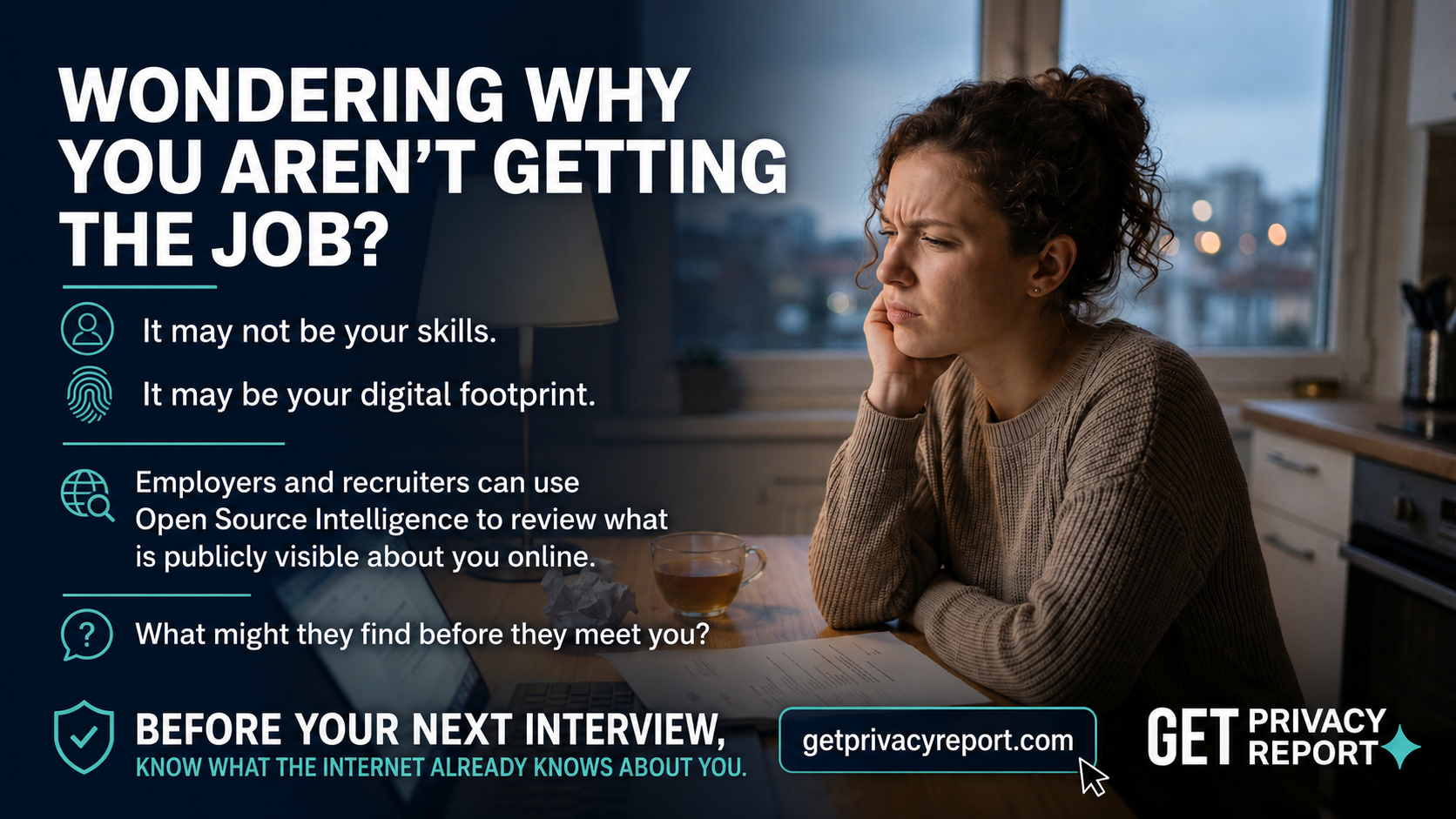
For many job seekers, the interview no longer starts when they enter the room. It may begin when a recruiter searches their name, checks a public profile, or notices an old username linked to a forum, portfolio, directory listing, or social media account.
That does not mean every employer is running a deep investigation. Many are not. But it does mean your online presence job search visibility is worth understanding. Public information can influence trust, credibility, cultural fit, and first impressions, especially when employers are choosing between similar candidates.
Why employers look people up online
Employers and recruiters often search candidates online for ordinary reasons. They may want to verify professional history, understand a candidate's public work, review a portfolio, check whether a public profile matches a resume, or see how someone presents themselves in public.
CareerBuilder reported in 2018 that 70% of employers used social networking sites to research job candidates during the hiring process. A separate CareerBuilder survey reported by CNBC in 2017 found that some employers were less likely to interview candidates they could not find online. These numbers are not a guarantee of what any single employer will do, but they show that online review has become a normal part of many hiring workflows.
This is where a balanced view matters. A visible online presence can help you. A strong professional profile, thoughtful public writing, a portfolio, or community involvement can support your application. The issue is not being visible. The issue is not knowing what is visible.
What Open Source Intelligence means in plain English
Open Source Intelligence, often shortened to OSINT, simply means reviewing information that is publicly accessible. In this context, it may include search results, public social media visibility, professional profiles, old usernames, public directories, media mentions, data breach exposure indicators, and other open web references.
Public-source review is not hacking. It does not involve breaking into accounts, bypassing logins, impersonating people, or accessing private systems. It is closer to asking: if someone searched your name, email address, username, or public identifiers, what could they reasonably find?
Important distinction: OSINT privacy awareness is about understanding public visibility. It is not a background check, private investigation, credit check, or guarantee that every reference to you online will be found.
What employers may see in a public online search
A basic online review can surface more than a person expects. Depending on how long you have been online and how consistent your identifiers are, public information may include:
- Search results for your full name, common name, or previous names
- Professional profiles, portfolios, directory listings, and public resumes
- Public social media bios, profile photos, posts, comments, tags, and follower visibility
- Old accounts or forgotten profiles using the same username
- Email exposure indicators from public breach datasets or pasted references
- Forum posts, reviews, community pages, club mentions, or event listings
- Public references that connect your name to a location, employer, school, hobby, or alias
None of these items automatically means something negative. The risk is that scattered fragments can be interpreted quickly, unfairly, or without context.
How online information can affect job opportunities
Hiring decisions are meant to focus on relevant experience, skills, and fit for the role. In practice, public online information can still shape how a person is perceived. A recruiter might see an outdated profile photo, a years-old public comment, a confusing username, or an old directory listing and form an impression before the candidate has a chance to explain.
That is especially important because online information is not always accurate, current, or fair. It can be old, copied from another site, missing context, or connected to someone with a similar name. It can also reveal personal details that should not be relevant to a hiring decision.
SHRM has warned that social media screening can raise discrimination risks because employers may see protected or personal information that should not influence hiring. The U.S. Equal Employment Opportunity Commission also makes clear that employers should not base employment decisions on protected characteristics or stereotypes. For job seekers, the takeaway is not panic. It is awareness: public visibility can create impressions, and impressions can matter.
Why old or inaccurate information still matters
Most people have old internet clutter. It might be a forgotten account from university, an old forum username, a public comment made years ago, a workplace profile that was never removed, or a directory page that copied information from another source.
Even if the information is outdated, it can still appear in search results. Pew Research Center has found broad public support for the ability to remove certain personal information from online searches, including employment-related information and negative media coverage. That reflects a simple reality: people know that old public information can follow them long after the original context has disappeared.
What job seekers can do now
You do not need to become an investigator to improve your online reputation. Start with practical steps:
- Search your full name, common name, email address, and main usernames in a private browsing window.
- Check image search results as well as standard web results.
- Review public social media profiles from the perspective of someone who is not connected to you.
- Update professional profiles so job titles, dates, bios, and photos are consistent.
- Remove unnecessary public details such as exact location, personal phone numbers, or old employer information where possible.
- Close or update old accounts you no longer use.
- Use different usernames for personal, professional, and sensitive accounts.
- Enable multi-factor authentication and check for reused passwords if breach exposure indicators appear.
The goal is not to erase your life from the internet. The goal is to make your public footprint more intentional, accurate, and appropriate for the opportunities you care about.
Privacy awareness, not fear-based messaging
It is easy to make this topic sound frightening. That is not helpful. Most people do not need fear; they need clarity. A public online review should help you understand what is visible, what may be misunderstood, and what practical steps you can take.
Not every employer checks the same sources. Not every public result matters. A single search result does not explain why someone did or did not get a job. But your public online footprint is one possible factor in how others understand you, and it is worth reviewing before someone else does.
Final thoughts
Your digital footprint can work for you or against you. A clear professional profile, consistent public information, and thoughtful privacy settings can support your job search. Old, confusing, or unnecessary exposure can do the opposite.
If you want to understand what is publicly visible about you online before someone else searches, Get Privacy Report can help you see your digital footprint more clearly. We provide manual public-source privacy reports for individuals, with plain-English findings and practical next steps.
Get Privacy Report provides manual public-source OSINT privacy reports for individuals worldwide. The Full Individual Privacy Report is a one-off AUD $69 report covering search visibility, email exposure indicators, username footprint, public profile observations, and a priority action checklist. Start your report →